Paper Mill Floor Cleaning Equipment: Sweepers & Scrubbers
Published
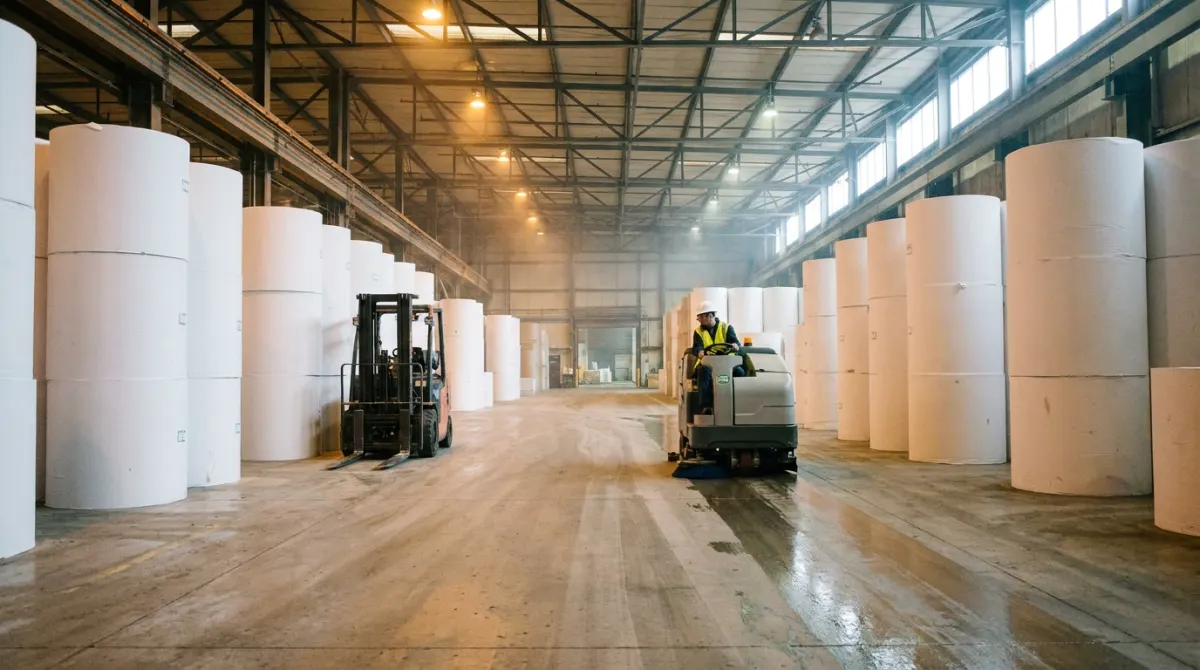
Walk any paper mill floor in Wisconsin and you’ll see the same thing: fiber dust in the corners, broke and trim scraps along the aisles, and a film of starch, coating, or white-water residue near the machines. Wood processing plants add sawdust, bark, and chips to the mix.
That’s not one cleaning problem. It’s three — dry debris, fine dust, and wet slurry — and most mills try to solve all three with a broom, a hose, and whatever machine came with the building. Here’s how to match the right paper mill floor cleaning equipment to the mess you actually have.
Why Paper and Wood Plants Are Hard on Floors
Paper and wood facilities combine the worst of dry manufacturing and wet processing under one roof.
- Dry side: wood chips, bark, sawdust, paper trim, core scraps, and fine fiber that settles everywhere
- Wet side: white water, stock spills, starch and coating drips, hydraulic oil, and condensation near dryer sections
- Traffic: forklifts and clamp trucks hauling heavy rolls and bales all shift long
Leave fiber on a damp floor and it turns into a slick paste that forklifts track across the plant. Leave fine dust to build up and it ends up on ledges, beams, and equipment. Clean floors here are a safety issue first and a housekeeping issue second.
Start With the Dust: A Word on Combustible Dust
Wood dust and paper fiber can be combustible. Combustible dust safety guidance expects facilities to keep accumulations under control, and housekeeping is a big part of that.
Two practical takeaways:
- Don’t just push dust around. A sweeper with a good dust control system captures fine material instead of throwing it back in the air. Dry push brooms and compressed air tend to make the problem worse.
- Check your hazard classification first. If parts of your plant are classified for combustible dust, your safety team needs to sign off on what equipment can run there. A floor machine is part of the solution, not a substitute for a dust hazard analysis.
The Right Machine for Each Zone
Most mills need more than one type of machine. Think in zones.
Receiving, Woodyard, and Debarking Areas: Rider Sweepers
Where chips, bark, and heavy dry debris pile up, a rider sweeper does the heavy lifting. It picks up bulky material a scrubber would choke on and covers large aisles quickly.
The Kodiak K46SW rider sweeper is built for this kind of work, and the Factory Cat 34 sweeper is a strong walk-behind option for tighter areas, smaller plants, or crews that want something simple to run. Look for a machine with a hopper sized for your debris volume and filtration you can actually keep clean — on a dusty floor, a clogged filter means a dust cloud behind the machine.
Converting, Finishing, and Warehousing: Scrubbers or Sweeper-Scrubbers
Converting lines, rewinders, and finished goods warehouses usually see lighter debris with more fine dust and occasional spills. A sweeper-scrubber combination handles both in one pass — it picks up trim and dust, then scrubs and dries the floor behind it.
For large finished-goods areas with heavy forklift traffic, a rider scrubber like the Factory Cat XR has the durability for multi-shift mill duty. If you’re cleaning mid-size areas and want rider productivity without a full rider footprint, the Factory Cat Mag-HD is worth a look. The Kodiak K22 is another solid compact rider for plants that need maneuverability around racking and roll storage.
Wet End and Machine Room: Scrubbers With a Strong Recovery System
Near the wet end, the job is slurry, stock spills, and starch residue. This is scrubber territory — and recovery matters more than anything else.
A scrubber that leaves a wet film behind just spreads fiber paste into a thinner, slicker layer. Look for:
- Cylindrical scrub decks where small debris mixes with liquid — they sweep and scrub at the same time
- Easy-to-clean recovery tanks with wide drains, because fiber settles fast
- Good squeegee performance so the floor is dry and walkable behind the machine
Maintenance: Fiber Is Hard on Machines Too
Paper fiber and fine wood dust don’t just dirty floors. They pack into filters, wrap around brushes, and clog hoses and recovery screens.
Build these into your routine:
- Empty and rinse recovery tanks and debris trays after every shift — not every week
- Pull and clean sweeper filters daily in high-dust areas
- Check brushes for wrapped fiber, strapping, and wire before each run
- Inspect squeegee blades often; grit from woodyard areas wears them faster
A scheduled preventive maintenance program pays off quickly in this environment. Machines that run in fiber and dust every day will break down early if they’re only looked at when something stops working. Our service and parts team can set up a PM schedule that fits your shift pattern.
Not Sure What You Need? Try Before You Commit
Mills are all different. Two plants making similar products can have completely different floor conditions, aisle widths, and traffic patterns.
If you’re not sure whether a sweeper, scrubber, or combination machine fits a certain area, run one in your plant first. A short floor scrubber rental on your actual floors will tell you more than any spec sheet.
FAQ: Floor Cleaning Equipment for Paper Mills and Wood Plants
Can one machine handle the whole mill? Rarely. Most mills get the best results with a sweeper for dry, heavy-debris areas and a scrubber or sweeper-scrubber for converting, warehouse, and wet-end floors.
Should we sweep or scrub around the paper machine? Scrub, with strong recovery. Sweeping wet fiber just smears it. Pick a machine that leaves the floor dry and keep the recovery tank clean.
Are battery machines practical for multi-shift mills? Yes, with the right battery and charging plan. Lithium-ion options and opportunity charging during breaks can keep machines running across shifts.
Does a floor sweeper solve our combustible dust issue? It helps with housekeeping, but it isn’t a full answer. Work with your safety team on your dust hazard analysis and confirm what equipment is approved for any classified areas.
Built for Wisconsin’s Mills
At Wisconsin Scrub & Sweep, we make buying, renting, and servicing floor care equipment simple. Whether you’re fighting chips and bark in the woodyard or fiber slurry at the wet end, our team will walk your floor and help you pick the right machine — no pressure, no runaround. Browse our floor scrubbers and floor sweepers, or give us a call at (262) 333-0799 or reach out online. We’d love to earn your business.