Post-Construction Cleanup Equipment for Industrial Floors
Published
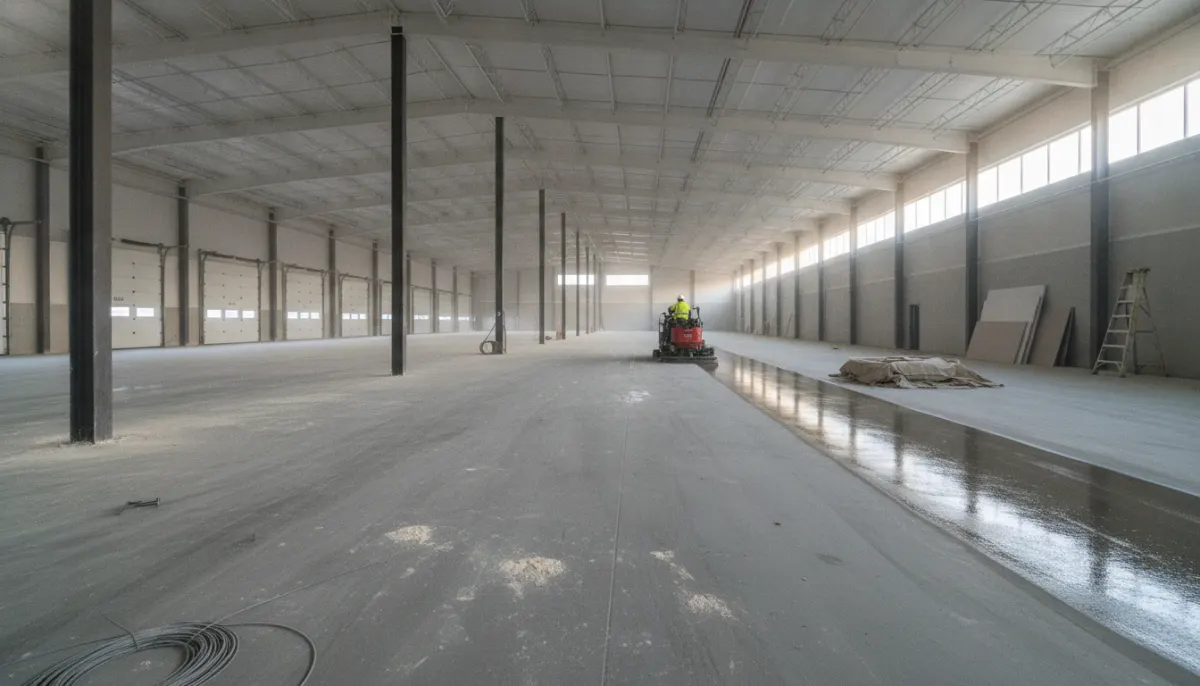
Fall is closeout season in Wisconsin. Contractors are racing the frost to get buildings enclosed, expansions punched out, and occupancy signed off before year-end.
Then they hand you the keys to a floor covered in concrete dust, drywall mud, screws, zip ties, and tape residue — and a move-in date that isn’t moving. Here’s how to pick the right post-construction cleanup equipment and get that floor production-ready without wrecking a machine in the process.
Why Post-Construction Floors Are a Different Animal
A new building’s floor isn’t just dirty. It’s dirty in ways normal production soil never is.
- Fine dust: Concrete dust, gypsum from drywall sanding, and dried saw-cut slurry are lighter than everyday shop dirt. Stir them up and they float, then resettle on racking, conveyors, and whatever you just cleaned.
- Sharp hardware: Screws, nails, drill bits, and tie wire end up everywhere. They slice squeegee blades, jam vacuum hoses, and wrap around brushes.
- Sticky residue: Tape, caulk, paint overspray, and drywall mud splatter don’t come up with water alone.
There’s a seasonal wrinkle, too. In October you can prop the dock doors and let dust vent out. By December, the doors stay shut — and every bit of dust you kick up stays inside with you.
The Three-Pass Approach: Pick, Sweep, Scrub
The biggest mistake we see is rolling a scrubber onto a construction floor first. Water plus fine dust equals mud, and that mud ends up in your recovery tank, your hoses, and your floor joints. Work dry before you work wet.
Pass 1: Pick It Up Before Any Machine Touches It
Walk the floor first. Shovel out the big debris, run a magnetic sweeper over the aisles for fasteners, and hit drywall mud splatter and tape with a long-handled floor scraper.
This pass feels slow. It’s also the cheapest one — a quick walk with a magnet costs a lot less than a new set of squeegee blades or a hose clog in the middle of the job.
Pass 2: Sweep Dry
Now bring in a sweeper with real dust control. A filtered industrial sweeper pulls up the fine stuff without launching it back into the air, which a push broom never manages.
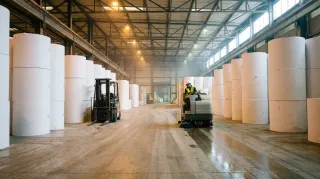
For mid-size spaces, a walk-behind like the Factory Cat 34 handles aisles and open floor well. For big distribution footprints, a rider like the Kodiak K46SW covers ground fast — and it’s built in Racine, Wisconsin. If it’s a one-time job, renting a floor sweeper for the closeout week is usually the smart play.
Expect to shake the filter and dump the hopper often — construction dust loads filters much faster than normal debris. Plan on two passes in the dustiest areas.
Pass 3: Scrub to Finish
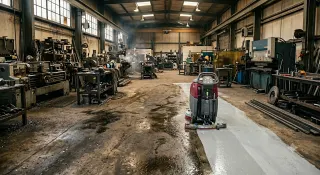
Once the dry dust is gone, the scrubber can do what it does best: lift the film that’s left and leave the floor clean and dry.
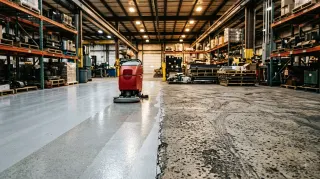
For large open warehouse and production areas, a rider floor scrubber like the Factory Cat XR gets it done in a fraction of the time. Offices, restrooms, break rooms, and tight corridors are walk-behind territory — something compact like the Factory Cat Micro-HD.
A few things to get right on this pass:
- Know your floor finish. Raw or densified concrete can usually take a scrub brush once the trades are out. Fresh sealers and coatings are different — ask your flooring contractor how long to wait and which cleaners are safe before you put water and chemical down.
- Start with a neutral cleaner. Aggressive chemistry isn’t needed for construction dust, and it’s the fastest way to damage a new finish.
- Match the brush or pad to the surface. Softer pads on polished or sealed concrete, stiffer brushes on raw slab.
- Plan for a second scrub. The first pass often moves the residue around. The second one takes it away.
Protect the Machine While It Works
Construction cleanup is hard on equipment. A few habits keep a one-week job from turning into a repair bill:
- Dump and rinse the recovery tank at every break. Slurry left overnight settles into a cement-like layer at the bottom.
- Check squeegee blades after every session for nicks and cuts. A torn blade leaves streaks and water behind.
- Clear the vacuum hose and filters — drywall dust packs them fast and kills suction.
- Flush the solution lines at the end of the job so leftover grit doesn’t end up in your first production-week cleaning.
If the machine starts leaving water or streaks mid-job, that’s almost always a blade, hose, or filter issue — not a dead machine.
Rent, Buy, or Both?
If this is a one-time closeout, renting makes the most sense. You get the right sweeper and scrubber for the job, and they go back when the floor’s done.
If the facility is going to need a scrubber anyway, there’s a good case for buying now and putting it straight to work. A common approach: rent the sweeper for the dirty dry work, and run your new scrubber through the finish passes so it’s in place and your crew is trained before Day One.
Expansion closeout dates slip constantly. That’s one more reason rental flexibility matters — nobody wants to own a machine for a project that just got pushed three weeks.
Frequently Asked Questions
Can I scrub a brand-new concrete floor? Usually, once the trades are done and the floor is cured — but it depends on the finish. For sealed or coated floors, confirm cure time and compatible cleaners with your flooring contractor first.
Should I sweep or scrub first after construction? Sweep. Always. Scrubbing heavy dust turns it into slurry that’s harder to remove and harder on your machine.
How many passes does a post-construction floor need? Plan on a debris pick, one or two sweeper passes, and two scrub passes in the heaviest areas. Light-traffic office space may need less.
Isn’t the floor already clean when the contractor turns it over? Construction contracts often only call for “broom clean” at turnover. That’s fine for a walkthrough — it’s not the same as a floor ready for product, forklifts, and an audit.
Let’s Get Your Floor Ready
At Wisconsin Scrub & Sweep, we make buying and renting floor care equipment simple. Whether you’re closing out a new building, finishing an expansion, or just trying to make your move-in date, our team will help you pick the right sweeper and scrubber for the job — no pressure, no runaround. See our rental options or ask us about a Factory Cat or Kodiak machine you can keep working long after the contractors leave. Give us a call at (262) 333-0799 or reach out online — we’d love to earn your business.