
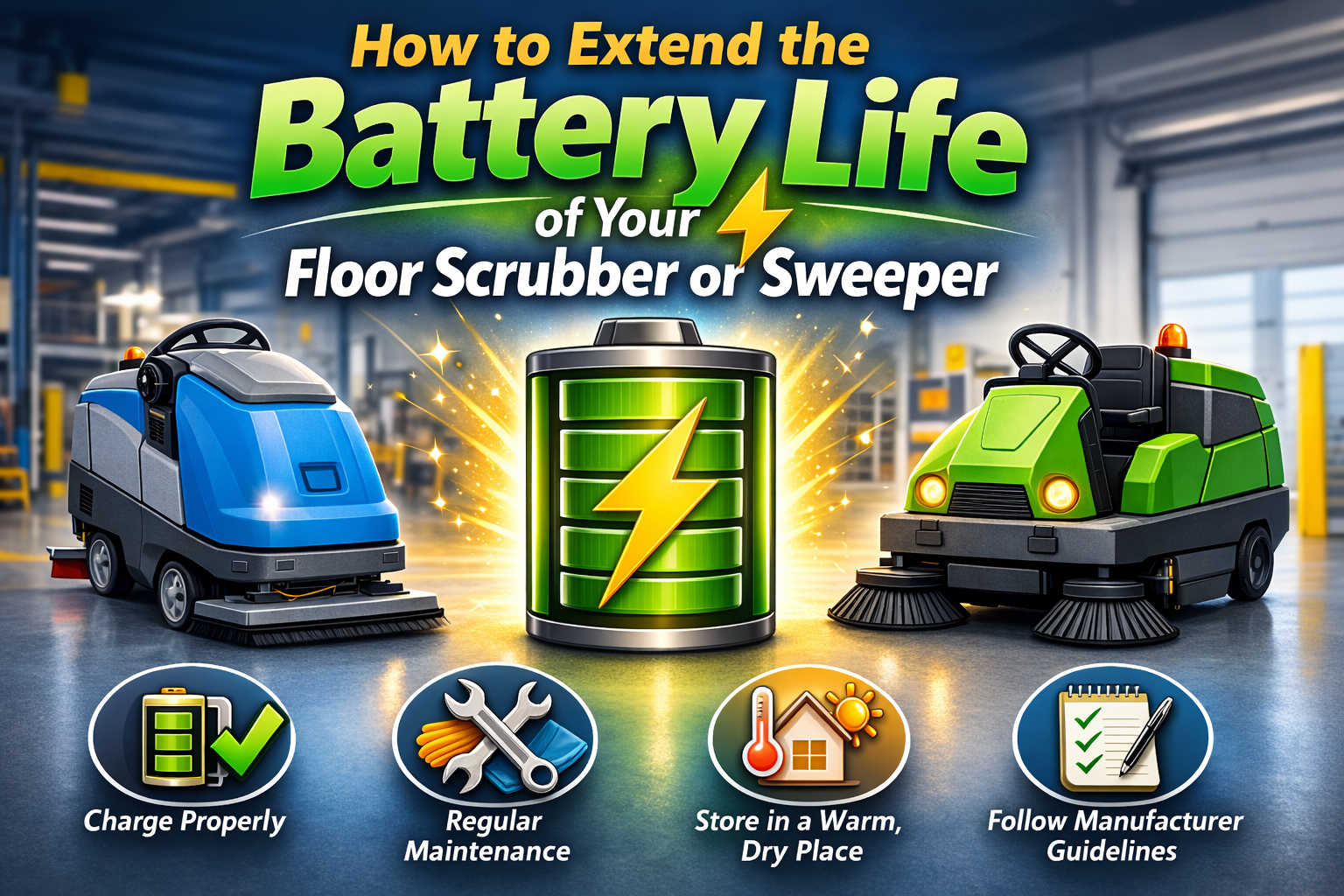
If you own or operate a battery-powered floor scrubber or sweeper, your battery isn’t just a component — it’s the heart of the machine. When it goes, your machine goes. And replacing a lead-acid, maintenance-free (AGM), or lithium-ion battery isn’t cheap.
The good news? Most premature battery failures are preventable. With a few consistent habits, you can get significantly more life out of your battery and avoid costly downtime.
Here’s what actually works.
Why Battery Life Matters More Than You Think
A quality floor scrubber battery can last 3–5 years under good conditions. Under bad conditions? You might be looking at 1–2 years before it starts losing capacity. That’s a huge difference — and it almost always comes down to how the machine is used and maintained day-to-day.
This applies whether you’re running a Factory Cat floor scrubber in a manufacturing facility or a Kodiak sweeper on a warehouse floor. The principles are the same.
1. Don’t Let Your Battery Run Dead.
This is the single biggest killer of floor scrubber batteries — and the most common mistake operators make.
Deep discharging (running the battery all the way down to zero before charging) is brutal on lead-acid batteries. Every time you fully drain it, you’re shortening its total lifespan. Most manufacturers recommend recharging when the battery hits 20–30% capacity remaining, not when the machine starts crawling.
Get your operators in the habit of plugging in at the end of a shift — not at the end of battery life.
2. Charge After Every Shift, Not Just When It’s Dead.
Opportunity charging is your friend. Plug in the machine after every shift, even if the battery isn’t fully depleted. This keeps the charge topped off and reduces the depth of each discharge cycle.
One exception: lithium batteries handle partial charging extremely well. Lead-acid batteries do too, as long as you let them complete a full charge cycle when you do plug them in.
Don’t unplug early. A half-finished charge cycle is almost as bad as a deep discharge. Let the charger do its job.
3. Use the Right Charger.
This sounds obvious, but it gets ignored all the time. Using an incompatible charger — or a cheap replacement — can damage your battery faster than almost anything else.
Your machine came with a charger matched to its battery chemistry and capacity. Stick with it. If you need a replacement, get the right one. Our service and parts team can help you source the correct charger for your floor scrubber or floor sweeper — don’t just grab whatever’s on the shelf.
4. Keep Your Battery Clean and the Terminals Corrosion-Free.
Lead-acid batteries off-gas during charging, and that residue builds up on terminals over time. Corroded terminals increase resistance, reduce charging efficiency, and can cause premature battery failure.
Add this to your regular maintenance checklist:
• Wipe down the battery case monthly.
• Inspect terminals for white or greenish buildup.
• Clean terminals with a wire brush and a baking soda/water solution if needed.
• Apply a thin layer of terminal protector spray after cleaning.
Takes five minutes. Saves you hundreds of dollars.
5. Check Water Levels on Flooded Lead-Acid Batteries.
If your machine uses flooded (wet cell) lead-acid batteries, the electrolyte level matters. Running low on water causes the plates inside to dry out and form sulfate, which permanently reduces capacity.
Check water levels every 5–10 charge cycles. Top off with distilled water only — never tap water. And only add water after charging, not before, to avoid overflow.
Sealed AGM or lithium batteries don’t require this, but flooded cells are still common in a lot of commercial floor care equipment. Know what you have.
6. Store Equipment Properly When Not in Use.
Wisconsin winters have a way of sitting machines for weeks at a time. If you’re parking a scrubber or sweeper for an extended period:
• Charge the battery fully before storage.
• Store it in a temperature-controlled environment — extreme cold kills battery capacity fast.
• If storing for more than a month, put the battery on a maintenance charger (also called a trickle charger) to prevent self-discharge.
A battery left sitting dead in a cold warehouse is a battery you’ll be replacing in the spring.
7. Train Your Operators.
The best maintenance program in the world falls apart if the people running the machines don’t follow it. Operator habits are the number one variable in battery lifespan.
A quick 10-minute training session covering:
• When to plug in.
• How to check the battery indicator.
• What “battery nearly dead” looks like on their specific machine.
• Who to call if something seems off.
...goes a long way. Post a simple checklist near the charging station if you have to. Make it easy to do the right thing.
8. Schedule Regular Service.
Even if you’re doing everything right, batteries and charging systems should be inspected periodically by a technician. A failing cell in a multi-cell battery will drag the whole pack down — and you often won’t notice until runtime gets dramatically shorter.
Our service team works on Factory Cat and Kodiak equipment regularly and can catch issues before they turn into replacements. Preventive service is always cheaper than reactive repair.

Frequently Asked Questions
How long should a floor scrubber battery last?
With proper care, a quality lead-acid battery should last 3–5 years. Lithium batteries often last longer — 6–8 years is achievable. Poor charging habits and neglected maintenance can cut those numbers in half.
Should I charge my floor scrubber every night?
Yes. Charging after every shift — even partial ones — is one of the best things you can do for battery longevity. Just make sure you let it complete a full charge cycle.
What kills floor scrubber batteries fastest?
Deep discharging (running to zero), incomplete charge cycles, the wrong charger, and lack of water maintenance on flooded batteries. These four things account for the vast majority of early battery failures.
Can I upgrade from lead-acid to lithium?
Often yes, depending on the machine. Lithium batteries charge faster, last longer, and don’t require water maintenance. Talk to us — we can tell you whether a lithium upgrade makes sense for your specific Factory Cat or Kodiak unit.
The Bottom Line
Battery maintenance isn’t complicated. It’s mostly about building consistent habits and not ignoring the small stuff. Do the basics right, and your battery will outlast your expectations. Skip them, and you’ll be writing a check you didn’t plan on writing.
At Wisconsin Scrub & Sweep, we make servicing and maintaining floor care equipment simple. Whether you need a battery inspection, a replacement charger, or a full service visit for your Factory Cat or Kodiak machine, our team is here to help — no runaround, no guesswork.
Visit our service and parts page to get started, or browse our new equipment listings if it’s time for an upgrade. Give us a call at (262) 333-0799 or reach out online — we’d love to earn your business.