Forklift Traffic and Floor Care: Why Clean Floors Matter
Published
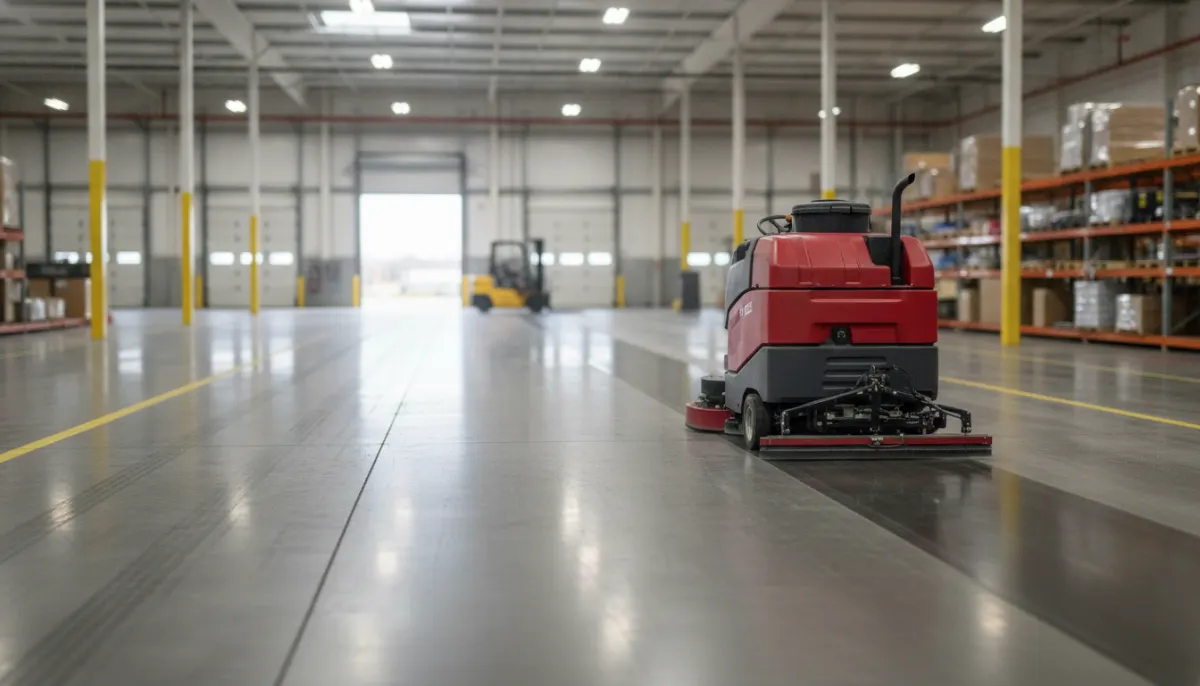
Forklifts are the workhorses of most Wisconsin plants and warehouses. They’re also expensive, they run every shift, and they spend their whole working life rolling across the same concrete.
That’s why forklift traffic and floor care belong in the same conversation. The condition of your floor shows up in your tires, your bearings, your load stability, and how often a truck sits in the shop instead of moving product.
What Your Floor Is Doing to Your Forklifts
Most facilities think of floor cleaning as housekeeping. On a floor with forklift traffic, it’s closer to fleet maintenance.
Here’s what a dirty floor actually does to the trucks running on it:
Grit acts like sandpaper. Fine dust, concrete fines, broken pallet chips, and shrink-wrap scraps get ground into the floor by every pass. That debris works against tire treads all day, every day — and it doesn’t care whether you run cushion or polyurethane tires.
Debris gets into places it shouldn’t. Dust that gets kicked up by traffic settles on mast channels, chains, and anything with a seal. Your forklift mechanic will tell you the same thing we tell scrubber owners: dirt is the enemy of moving parts.
Oily, dusty floors cost you traction. A light film of hydraulic fluid or coolant under a layer of dust is a slippery combination for a loaded truck trying to stop or turn. Clean, dry concrete gives tires something to grip.
Rough rides shift loads. Packed-on debris, stray hardware, and broken pallet boards create bumps that jolt loads on the forks. That’s hard on product, hard on racking when a load clips an upright, and hard on operators who feel every jolt.
Forklift Traffic Is Hard on the Floor, Too
The relationship runs both ways. Heavy, constant traffic wears your concrete — and a dirty floor wears faster.
When grit sits on the surface, every tire pass grinds it in. Over time that dulls sealed or polished concrete, wears through floor coatings, and fades aisle striping that your operators rely on to stay in their lanes.
Then there are tire marks. Black scuffs at intersections, dock plates, and turn-around areas build up fast in a busy facility. They look bad, they hide spills and hazards, and once they’re layered on, a mop won’t touch them. Regular machine scrubbing with the right brush or pad keeps them from becoming a permanent part of your floor.
Sweep First, Then Scrub
The most effective floor care program for a forklift facility is simple: get the dry debris up first, then scrub.
Sweeping: Pull the Grit Before It Does Damage
A sweeper picks up the stuff that does the most damage to tires and finishes — pallet splinters, banding clips, shrink-wrap tails, gravel tracked in from the yard, and the fine dust that turns into a gray film.
For large warehouses and distribution centers, a rider like the Factory Cat TR (built right here in Wisconsin) or the Kodiak K46SW covers long aisles and open staging areas without wearing out an operator. For smaller shops or tighter spaces, the Factory Cat 34 walk-behind sweeper handles debris pickup with far less effort than a push broom. You can compare options in our floor sweeper lineup.
Sweeping first also protects your scrubber. Big debris that goes under a scrub deck ends up caught in the squeegee, which means streaks and wet floors behind the machine.
Scrubbing: Get the Film, the Fluids, and the Marks
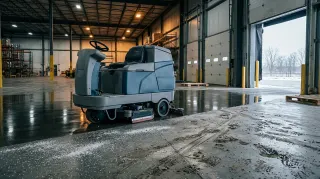
Once the loose debris is gone, a scrubber takes care of what a sweeper can’t — oil and hydraulic drips, ground-in dirt, and tire marks. It also leaves the floor dry behind the squeegee, so traffic can roll right back through.
For wide aisles and big square footage, a rider scrubber is the right tool. Factory Cat’s GTX and GTR riders fit most mid-size to large facilities, and the XR is built for the heaviest-duty industrial floors. If you want rider productivity in a more compact package, the Mag-HD is worth a look. Browse the full range of rider floor scrubbers to see what fits your layout.
A quick tip on tire marks: the brush or pad you choose matters as much as the machine. An aggressive grit brush may be the right call on bare, unsealed concrete, but it’s the wrong choice on a coated or polished floor. If you’re not sure, ask us — we’d rather help you pick the right brush than sell you the wrong one.
Build a Routine Around Your Traffic Patterns
Every facility is different, but the forklift-heavy operations that keep their floors (and fleets) in good shape tend to follow a few common habits:
Clean the high-traffic zones most often. Dock doors, main aisles, intersections, and charging areas take the most abuse. Those spots may need daily attention even if the rest of the building doesn’t.
Schedule around the shifts. Running a sweeper or scrubber during a shift change or a slow period keeps the machine out of the forklifts’ way and keeps your operators safe.
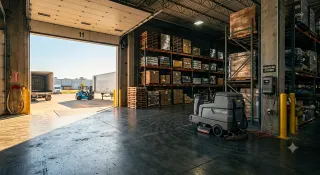
Watch the dock doors in winter. In Wisconsin, every truck that backs in brings salt, slush, and sand with it. Forklifts then carry that mess deep into your building. Stepping up cleaning near the docks from late fall through spring thaw pays off.
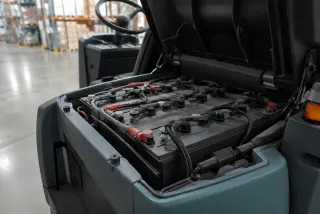
Clean up spills right away. Hydraulic leaks and battery-area spills shouldn’t wait for the next scheduled scrub. A compact walk-behind scrubber parked near the charging area makes quick cleanup easy.
Keep the floor machines maintained, too. A sweeper with worn brushes or a clogged filter leaves debris behind. A scrubber with worn squeegee blades leaves water behind. Regular service and parts support keeps your floor equipment doing its job — so it can keep doing its job for your forklifts.
Not Ready to Buy? Rent and Find Out
If you’re not sure whether a sweeper, a scrubber, or both makes sense for your traffic, renting is an easy way to find out. A rental lets your team run the machine on your actual floors during real shifts before you commit. Ask us about floor scrubber and sweeper rentals to get started.
Frequently Asked Questions
Do forklifts really wear out faster on dirty floors? Grit and debris on the floor act as an abrasive on tires and get kicked up into moving parts. Keeping the floor swept and scrubbed removes a source of wear that every truck in your fleet deals with on every shift.
Should I sweep or scrub a warehouse floor with forklift traffic? Usually both. Sweeping removes the loose debris that damages tires and clogs scrubbers. Scrubbing removes oil, fluids, ground-in dirt, and tire marks. Many facilities sweep more often and scrub on a set schedule.
How do I get forklift tire marks off a concrete floor? Regular machine scrubbing with the right brush or pad for your floor finish is the best way to keep tire marks from building up. Heavy, older buildup may take a more aggressive brush or a dedicated cleaner — match both to your floor so you don’t damage a coating or polish.
Can one machine handle sweeping and scrubbing? For some facilities, yes. But in forklift-heavy operations with lots of loose debris, a dedicated sweeper paired with a scrubber usually does a better job on both. We can walk you through the options for your floor.
Protect the Floor, Protect the Fleet
You’ve invested a lot in your forklifts. A consistent sweeping and scrubbing routine is one of the simplest ways to protect that investment — and your floor, your racking, and your people along with it.
At Wisconsin Scrub & Sweep, we make buying, renting, and servicing floor care equipment simple. Whether you’re running a single forklift in a machine shop or a full fleet across a distribution center, our team is here to help you find the right sweeper, scrubber, or combination — no pressure, no runaround. Explore our Factory Cat and Kodiak floor scrubbers or use our machine finder if you’re not sure where to start. Give us a call at (262) 333-0799 or reach out online — we’d love to earn your business.