Injection Molding Floor Cleaning: Pellets, Oil & Dust
Published
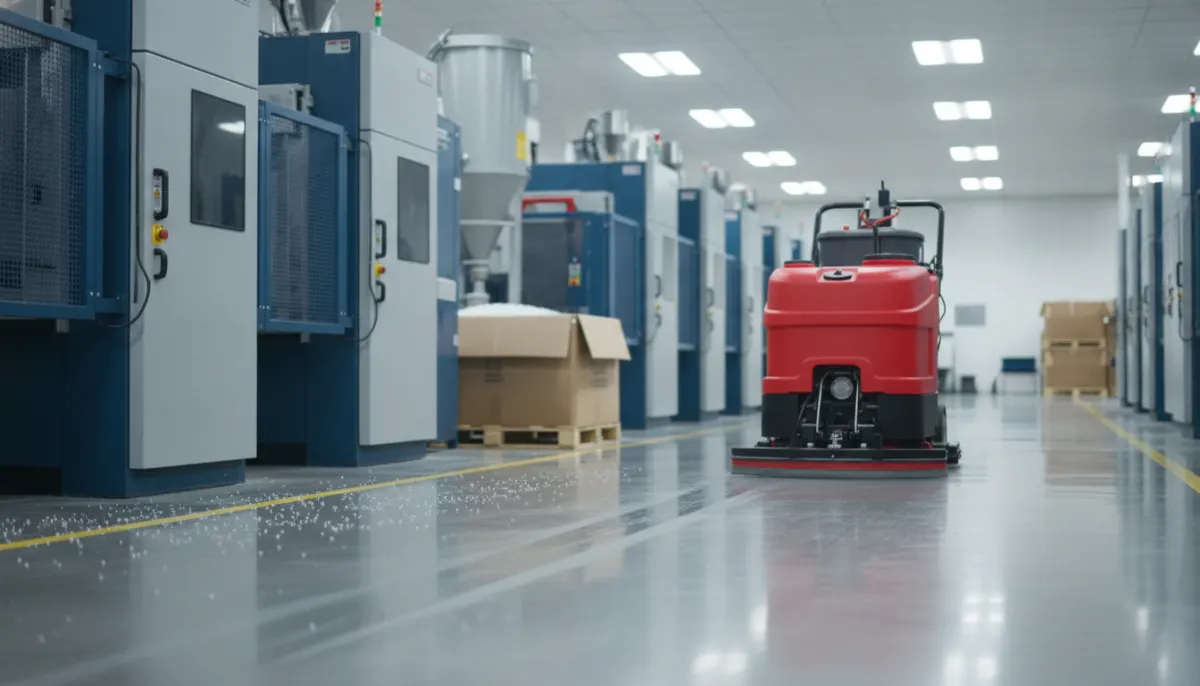
Walk the floor of almost any plastics plant and you’ll find the same thing: resin pellets. Under the press, around the dryer, along the conveying lines, ground into the cracks next to the grinder. Add a slow hydraulic weep from a press, a little mold release, and a film of regrind dust, and you’ve got a floor that’s slippery, hard to clean, and tough on everything that rolls across it.
Injection molding, extrusion, and blow molding shops across Wisconsin deal with this every shift. The good news is that it’s a solvable problem — if you match the machine to the mess instead of throwing a mop and a push broom at it.
Here’s how we approach injection molding floor cleaning with plastics customers.
Why Plastics Plant Floors Are Different
Most industrial floors deal with dust and dirt. Plastics floors deal with a few specific problems that stack on top of each other.
Pellets roll. A loose resin pellet is a tiny ball bearing. Step on a handful of them, or turn a pallet jack across them, and the floor stops being predictable. That’s a slip hazard first and a housekeeping problem second.
Pellets and regrind travel. They ride out of the press area on boots, carts, and forklift tires and end up in your warehouse, your shipping area, and your break room. Clean the source and you clean half the building.
Oil and pellets team up. Hydraulic fluid from presses and mold release around the tooling glue fine dust and pellet fragments to the concrete. Sweeping alone won’t lift that film — it needs scrubbing with real brush pressure.
Fines are the hidden problem. Grinding and regrind create a fine plastic dust that settles everywhere. Brushed around with a broom, it just gets airborne and lands somewhere else.
Zone by Zone: Matching the Machine to the Mess
Plastics plants aren’t one floor — they’re four or five different floors under one roof. Clean each zone for what it actually collects.
Press Floor and Molding Cells
This is ground zero: pellets, sprue and runner scraps, short shots, hydraulic weeps, and mold release. Sweep first, then scrub. If you run a scrubber straight into a pile of loose pellets, you’re asking for clogged squeegees and streaks.
For tight aisles between presses, a walk-behind sweeper like the Factory Cat 34 gets close to machine bases and picks up loose pellets and scrap into a hopper instead of pushing them around. Follow it with a walk-behind scrubber to cut the oil film.
Material Handling, Dryers, and Conveying
Wherever resin gets moved — gaylord dumping, dryer hoppers, vacuum loaders, blenders — you’ll find spills. These are usually concentrated messes, so quick response matters more than square footage. A compact, easy-to-grab machine that operators actually use beats a big rider that only comes out on Fridays.
Grinder and Regrind Areas
This is where fines live. Dry sweeping here tends to stir up dust, so lean on wet scrubbing to trap the fines in solution and pull them into the recovery tank. Keep the area swept of larger chunks first so they don’t end up under your squeegee.
Warehouse, Shipping, and Main Aisles
Once pellets and dust escape the production floor, they spread across big open areas. This is where a rider sweeper earns its keep. The Factory Cat TR and the Kodiak K46SW both sweep a wide path from the seat, so one operator can cover the long aisles and dock areas without walking miles a shift. Pair that with a rider scrubber on a regular schedule and the whole building stays cleaner, not just the press floor.
Why Cylindrical Scrub Decks Work So Well in Plastics
If there’s one equipment choice that matters most in a plastics plant, it’s the scrub deck type.
A disk deck scrubs with flat rotating brushes or pads. It’s great for general scrubbing and oily films — but loose pellets tend to get flung around or slip under the squeegee.
A cylindrical deck uses counter-rotating roller brushes that sweep small debris into a collection tray while they scrub. For a floor that’s always got a few stray pellets, short-shot pieces, or regrind chips on it, that’s a big deal. Fewer passes, fewer clogged squeegees, less pre-sweeping on light days.
Factory Cat builds cylindrical options across the lineup — from walk-behinds like the Mag-HD up to riders like the GTX and GTR — and Kodiak’s walk-behind K25 comes in a cylindrical version too. We’re not saying never run a disk deck in a plastics plant; for heavy hydraulic oil on smooth concrete, disk brush pressure is hard to beat. But if pellets are your daily headache, start your conversation with cylindrical.
Building a Routine That Sticks
The best machine in the world doesn’t help if it sits in the corner. Plastics customers who keep their floors under control usually do a few simple things:
- Sweep the press floor every shift, or at least at shift change, before pellets get walked across the building.
- Scrub the production floor daily to stay ahead of the oil and fines film.
- Fix the source. Leaky press hydraulics, loose loader lids, and overflowing grinder bins create most of the mess. Your floor machine shouldn’t be your leak detection program.
- Empty hoppers and recovery tanks every time. Pellets and oily water left sitting in a machine overnight make for a bad morning — and a shorter machine life.
- Check squeegees and brushes often. Plastic fragments can nick squeegee blades, and a nicked blade leaves streaks and water behind.
FAQ: Floor Cleaning in Plastics Plants
Can I just run a floor scrubber over loose pellets? You can with a cylindrical deck on light debris, but piles of pellets should be swept first. Running a disk scrubber through loose pellets usually means clogged squeegees and wet streaks.
Do I need a sweeper and a scrubber? Most plastics plants benefit from both — a sweeper for loose pellets and scrap, a scrubber for oil and fines. Smaller shops sometimes get by with a cylindrical scrubber and a good spill routine. We’ll help you figure out which side of that line you’re on.
What about used or rental equipment? Both are good options, especially for a second shift, a new building, or testing a machine before you buy. Our used floor scrubbers and sweepers stretch a budget, and our floor sweeper rentals are an easy way to try a sweeper on your own floor.
How do I keep the machine itself running in a dirty environment? Regular service. Plastic dust and oily water are hard on vacuum motors, filters, and squeegees. A preventative maintenance plan catches the small stuff before it turns into downtime.
Let’s Get Your Plastics Floor Under Control
At Wisconsin Scrub & Sweep, we make buying, renting, and servicing floor care equipment simple. Whether you’re fighting pellets on the press floor, oily film around your molding cells, or regrind dust spreading into the warehouse, our team is here to help you find the right solution — no pressure, no runaround. Take a look at our Factory Cat and Kodiak floor scrubbers and industrial floor sweepers, or bring us your floor and we’ll walk it with you. Give us a call at (262) 333-0799 or reach out online — we’d love to earn your business.