Plant Shutdown Deep Cleaning: Holiday Floor Checklist
Published
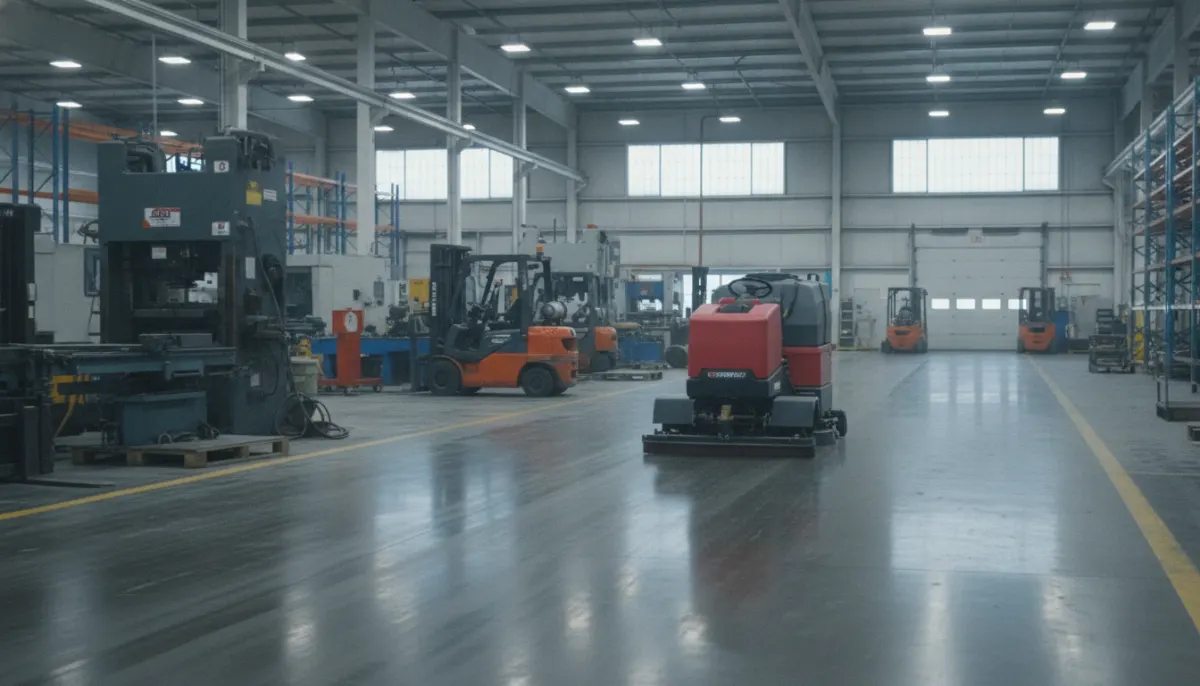
Every plant has a list of floor jobs that never get done. The grime line under the racking. The oil-stained concrete around the presses. The corner behind the compressor that nobody has seen since the last expansion. They don’t get done because production never stops long enough to let them.
Then the holidays show up. For a lot of Wisconsin manufacturers, that last stretch of December is the one window all year when the floor is empty, the forklifts are parked, and nobody needs aisle three at 2 p.m.
A holiday shutdown is the best deep-cleaning opportunity your facility gets all year — if you plan it before the last shift clocks out. Here’s how to make it count.
Why the Shutdown Window Is Worth Planning For
Daily scrubbing keeps a floor presentable. It doesn’t restore one. Routine cleaning works around whatever is in the way, so the same areas get skipped shift after shift, and the buildup there gets harder to move every month.
A shutdown flips that. Equipment can be moved, racking bays can be emptied, and you can run a machine slowly with heavy chemistry and long dwell time without anyone waiting on you.
The facilities that get the most out of it treat plant shutdown deep cleaning as a real project — with a scope, a crew, a schedule, and the right equipment lined up ahead of time. The ones that wing it usually end up with a nicer-looking main aisle and the same neglected corners.
Start With a Floor Walk Before Shutdown
Two or three weeks out, walk the floor with whoever runs maintenance and whoever will do the cleaning. Bring a phone and take pictures.
You’re looking for:
- Heavy buildup zones — around presses, CNCs, hydraulic equipment, and anywhere fluids weep
- Under-racking and behind-equipment areas that routine cleaning can’t reach
- Dock plates and entry aprons carrying early-winter salt and grit
- Faded aisle and safety markings that may need recoating once the floor is clean
- Damaged concrete or coatings you want to see clearly before deciding on repairs
That walk becomes your scope. It also tells you whether the machines you already own are up to the job or whether you need to bring something in for the week.
Sweep First — Every Time
The biggest deep-clean mistake we see is putting a scrubber on a floor that hasn’t been swept. Loose debris chews up brushes and squeegee blades, clogs the recovery system, and turns a scrubbing job into a mud-moving job.
Run a dry sweep across the whole floor first. For large open areas, a rider sweeper like the Factory Cat TR or the Kodiak K46SW clears a big space quickly from the seat. For tighter areas and cleanup around equipment, a walk-behind like the Factory Cat 34 gets in where a rider can’t. You can see the full lineup on our industrial floor sweepers page.
Sweep the high-buildup zones twice. It costs you very little time and saves a lot of wear on the scrubber.
Deep Scrub the Zones Production Never Lets You Touch
Once the floor is swept, work the problem areas first while the crew and the chemistry are fresh.
Oil and fluid zones. Pre-treat with a degreaser matched to your soil, give it real dwell time, then scrub slowly. A slow pass with fresh solution does more than a rushed one. On stubborn areas, a double scrub — one pass with the vacuum up to let the chemistry work, a second pass to pick it up — is often what finally breaks the film.
Under racking and around equipment. If bays can be emptied, empty them. These areas have often gone a long time without a real scrub, and they’re where dust and fines settle and stay.
Main traffic aisles. Save these for last. They get the most daily attention already, so they need the least restoration.
The deck type matters for restorative work. Cylindrical decks sweep small debris into a hopper while they scrub, which helps on floors that still have grit after the sweep. Orbital decks — available on machines like the Factory Cat Mag-HD and GTX — are built for the kind of aggressive, low-chemical surface prep that comes before recoating. If you’re not sure which fits your floor, that’s exactly the conversation we like to have.
Bring in the Right Machine for the Week
Here’s the honest truth about shutdown deep cleaning: the walk-behind that handles your daily cleaning may not be able to cover the whole plant in a few days.
That’s where a rental earns its keep. A larger rider floor scrubber — something like the Factory Cat XR for big, heavy-duty floors — can cover far more floor per shift than a walk-behind. Bring it in for the shutdown, run it hard, and send it back when production restarts.
Book shutdown rentals early. The last two weeks of December are when everybody else is planning the same project, and the equipment you want goes first. Our floor scrubber rentals page is the place to start.
Don’t Forget the Machines Themselves
A shutdown is also the quietest time of year to take care of your own fleet. Before the plant goes dark, give each machine a proper end-of-project cleanout:
- Drain and rinse both tanks so nothing sits stagnant over the break
- Clean the solution and vacuum filters and clear the squeegee hose
- Inspect brushes, pads, and squeegee blades — and order replacements now
- Charge batteries fully before the plant goes quiet
If anything on your machines has been acting up, the shutdown is also a smart time for a preventative maintenance visit. Our service and parts team would much rather work on a machine during your downtime than on your first day back.
Frequently Asked Questions
How far ahead should we plan a shutdown deep clean? Start the floor walk two to three weeks before shutdown. That gives you time to set the scope, order chemistry and consumables, and reserve any rental equipment before December gets busy.
Should we sweep before scrubbing? Yes, always. Sweeping first protects your scrubber’s brushes, squeegees, and recovery system, and it makes every scrubbing pass more effective.
Is renting a bigger scrubber for the shutdown worth it? For most mid-size and large plants, yes. A rider covers far more floor per hour than a walk-behind, which is what makes a full-plant deep clean realistic in a short window.
What’s the most commonly missed area? Under racking and behind equipment. They get skipped every day, so they’re usually the dirtiest floor in the building — and the most satisfying to finally clean.
Make the Most of Your Shutdown
At Wisconsin Scrub & Sweep, we make buying, renting, and servicing floor care equipment simple. Whether you need a rider scrubber for shutdown week, a sweeper to get the floor ready, or a new Factory Cat or Kodiak machine to keep things clean once production restarts, our team is here to help you find the right solution — no pressure, no runaround.
We’re local, we communicate, and we stand behind every machine we sell and service. Browse our floor scrubbers or reserve a shutdown rental before the calendar fills. Give us a call at (262) 333-0799 or reach out online — we’d love to earn your business.